

My five picks for a first piano in 2026, with US prices from Guitar Center and Korg’s US store on 11 October 2026:
Roland FP-10, $499.99: my first pick for most beginners.
Yamaha P-145BT, $529.99: the cheapest pick with Bluetooth audio for play-along tracks.
Korg B2+, $599.99: the biggest speakers here, 15 W per side.
Roland FP-30X, $649.99: the FP-10’s action with stronger speakers and room to grow.
Casio Privia PX-S1100, $729.99: the slimmest body, and it runs on batteries.
The buying rule I use: 88 full-size keys, a graded hammer action (heavier in the bass, lighter in the treble), and a sustain pedal input. All five meet it, and all five ship with a basic pedal.
How I chose
I picked from reputable makers (Roland, Yamaha, Casio, Korg) and kept models that have 88 weighted keys with graded hammer action, a sustain pedal input, a headphone output and a price under about $750. Specs come from each maker’s product page and prices from the retailer pages linked below, all checked on 11 October 2026. I did not run lab tests. I mark my opinions as opinions and name any published review I lean on.
Digital or acoustic for a beginner
A digital piano suits most new players better than an acoustic. You can practice in silence with headphones, and it needs no tuning. An acoustic needs a tuner about twice a year: in the US, Thumbtack put a standard tuning at $121 to $231 in October 2025, or about $240 to $460 a year. My piano maintenance guide has the details.
An acoustic makes sense if you have the room, the budget and a teacher who asks for one. Otherwise start digital and upgrade later.
Features a beginner piano needs
88 keys. First-year pieces fit on fewer keys, but a 61-key board runs out of range as your pieces grow.
Graded hammer action. Weighted keys that get heavier toward the bass build the finger strength an acoustic piano asks for. Roland calls its version PHA-4 Standard, Yamaha GHC, Casio Smart Scaled Hammer Action and Korg NH.
Polyphony. This number caps the notes the piano can sound at once, and the sustain pedal uses it up fast. The 64 notes on the Yamaha will carry a beginner; 96 or more leaves headroom.
Speakers and headphones. Built-in speakers for the room, a headphone jack for late practice.
Pedal input. The pedals in the box work as on/off switches. A piano-style pedal that supports half-pedaling feels closer to the real thing; my guide to piano pedals explains what each pedal does.
Bluetooth. Bluetooth MIDI connects a learning app without a cable. Bluetooth audio lets you play phone music through the piano’s speakers.
1. Best overall: Roland FP-10
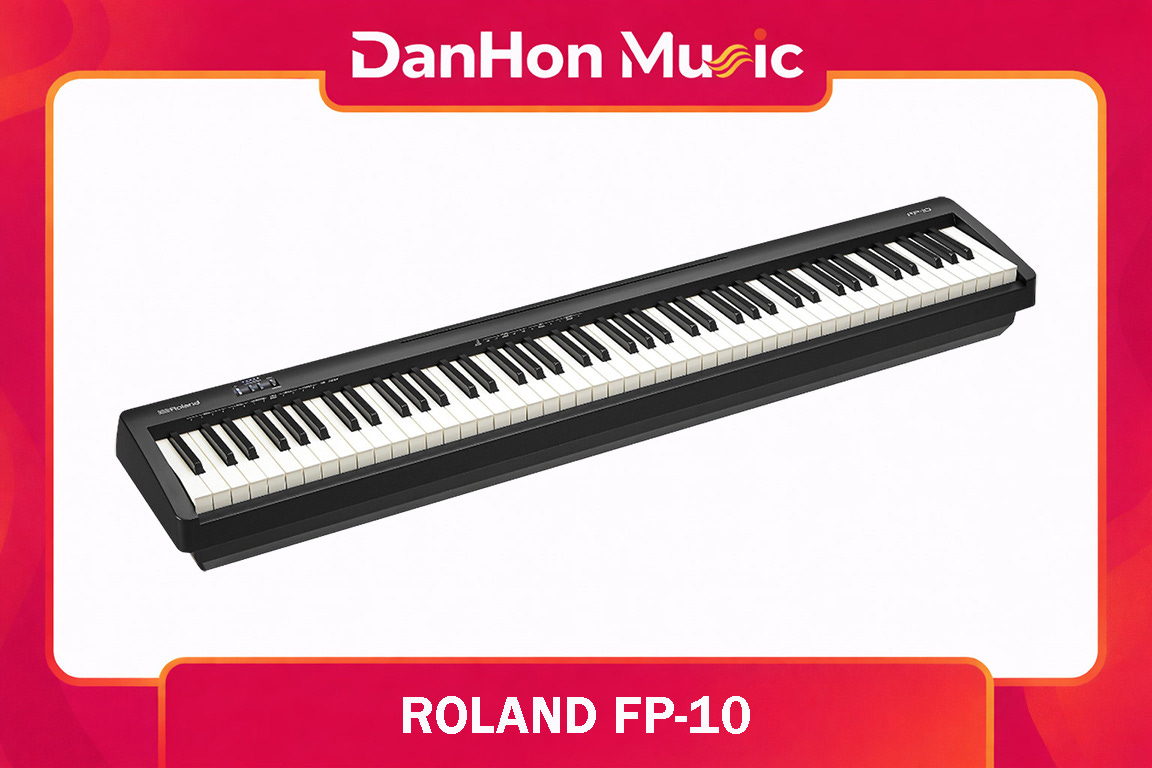
The Roland FP-10 is my first pick for most beginners. It has the same PHA-4 Standard keyboard as the pricier FP-30X, with escapement and ivory-feel key tops, and Roland’s SuperNATURAL Piano sound.
Specs: 96-note polyphony, 6 W x 2 speakers, Bluetooth MIDI, 27 lb 13 oz, 50-9/16 x 10-3/16 x 5-9/16 inches. A music rest and a pedal switch come in the box. Twin Piano mode splits the keyboard into two pianos with the same range, so a teacher and student can sit side by side.
Pros
The same action as Roland’s step-up models at $499.99
Bluetooth MIDI for apps such as the Roland Piano App
Twin Piano mode for lessons
Compact footprint
Cons
The smallest speakers of the five, 6 W per side
No Bluetooth audio, so you can’t stream songs through it
The included pedal switch can’t half-pedal; Roland’s DP-10 can
Price: $499.99 at Guitar Center, in stock on 11 October 2026.
2. Best for streaming on a budget: Yamaha P-145BT
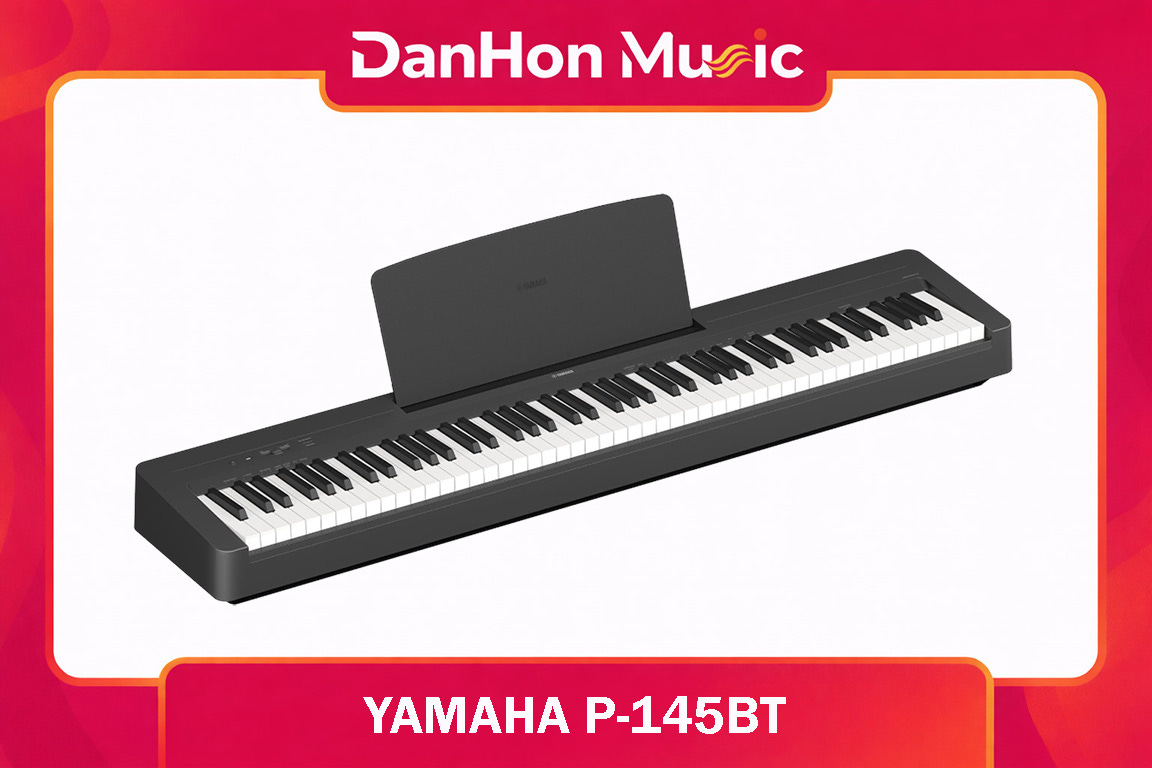
In the US, Yamaha lists the P-145BT, the P-145 with Bluetooth audio. It uses Yamaha’s GHC (Graded Hammer Compact) action and samples of the Yamaha CFIIIS concert grand, with damper resonance.
Specs: 64-note polyphony, 7 W x 2 speakers, 24 lb 8 oz, Bluetooth audio, USB audio and MIDI over one cable. A music rest and a footswitch come in the box. Duo mode splits the keyboard for teacher and student. Bluetooth MIDI needs Yamaha’s UD-BT01 adaptor, which costs extra; a USB cable connects the Smart Pianist app.
Pros
At 24 lb 8 oz, light enough to carry between rooms
Stream songs and lesson audio through the speakers
USB audio for recording yourself
Smart Pianist and Rec’n’Share app support
Cons
64-note polyphony, the lowest here
No escapement listed in Yamaha’s specs for the GHC action, unlike Roland’s PHA-4
Wireless MIDI costs extra
Price: $529.99 at Guitar Center, in stock on 11 October 2026.
3. Slimmest: Casio Privia PX-S1100
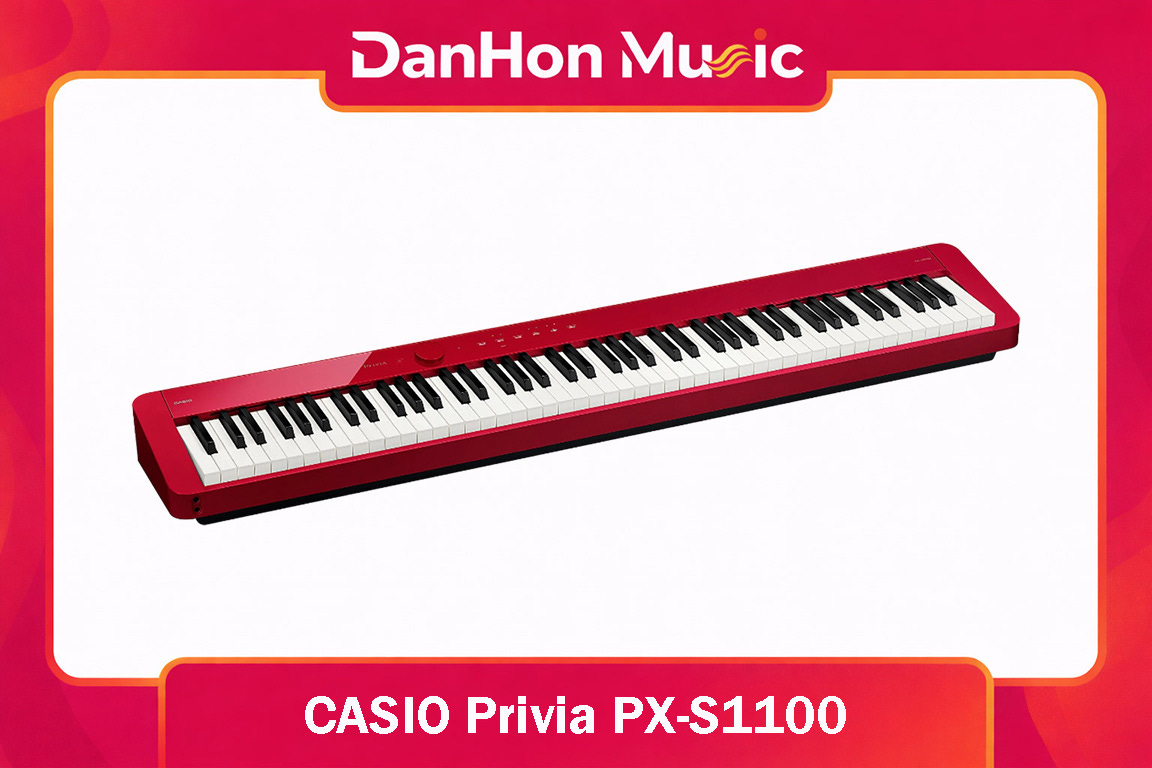
The Casio Privia PX-S1100 is 232 mm (about 9.1 inches) deep, and Casio calls it the world’s slimmest 88-key digital piano with hammer action and speakers, based on its own 2022 survey. Its Smart Scaled Hammer Action keys have an ebony and ivory texture, and the AiR sound source drives the piano tones.
Specs: 192-note polyphony, 8 W x 2 speakers, about 24.7 lb, six AA batteries for about four hours away from the wall. Casio includes a plug-in wireless adaptor for Bluetooth audio and MIDI, plus an SP-3 pedal and a music rest. Touch controls replace physical buttons. It comes in black, white and red.
Pros
The slimmest body here, easy to fit and move
Battery power
Bluetooth audio and MIDI in the box
192-note polyphony
Cons
The most expensive of the five
No screen; Piano Dreamers’ review notes that settings take some hunting, and the Casio Music Space app helps
Bluetooth depends on a plug-in adaptor in a rear USB port
Price: $729.99 at Guitar Center, in stock on 11 October 2026.
4. Best long-term value: Roland FP-30X
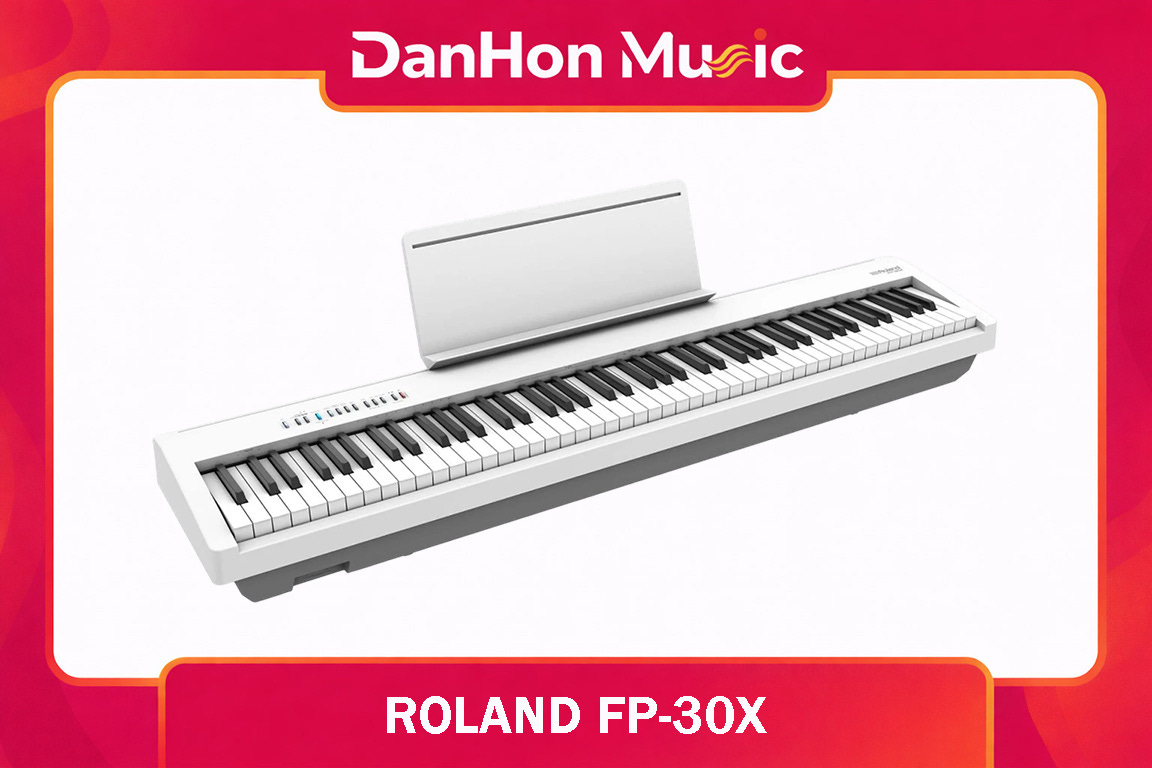
The Roland FP-30X keeps the FP-10’s PHA-4 Standard action and adds what the FP-10 lacks: bigger speakers, Bluetooth audio, more sounds and a three-pedal option.
Specs: 256-note polyphony, 11 W x 2 speakers, Bluetooth audio and MIDI, USB audio and MIDI, two headphone jacks, 32 lb 11 oz. A music rest and Roland’s DP-2 pedal switch come in the box. The KPD-70 three-pedal unit and the KSC-70 stand cost extra.
Pros
The same action as the FP-10 with almost twice the speaker power
Bluetooth audio and MIDI
256-note polyphony
Room to add three pedals later
Cons
About 5 lb heavier than the FP-10
$150 more than the FP-10 at Guitar Center
Price: $649.99 at Guitar Center, in stock on 11 October 2026.
5. Biggest sound for the money: Korg B2+
Korg released the B2+ in June 2025 as an update of the B2, with USB-C audio and MIDI and a revised speaker system. On 11 October 2026 Korg’s US store and Guitar Center’s B2 page both showed the original B2 as sold out, so the B2+ takes its place here.
Specs: Natural Weighted Hammer (NH) action with three touch settings, 120-note polyphony, 15 W x 2 speakers, 25.13 lb. The piano sounds include German and Italian concert grands. A damper pedal and music stand come in the box. It has an audio input for a phone, and no Bluetooth.
Pros
The most speaker power of the five
Damper pedal and music stand included
Korg bundles a three-month Skoove premium trial
Cons
No Bluetooth; apps need a USB cable
Half-pedaling needs the optional PU-2 pedal unit
Price: $599.99 at Korg’s US store, in stock in black and white on 11 October 2026.
The pick for your budget
About $500: Roland FP-10. Add a stand and a better pedal later.
$500 to $600: Yamaha P-145BT for Bluetooth audio, Korg B2+ for volume.
$650 to $750: Roland FP-30X for features, Casio PX-S1100 for a slim body and battery power. Yamaha’s P-225 ($769.99 at Guitar Center) adds 192-note polyphony and Yamaha’s CFX piano sound if you can stretch.
Prices move with sales. Compare the retailer page with a local store before you buy, and check what a bundle includes.
Other gear you need
A stand. An X-stand or Z-stand works, or the maker’s furniture stand: Roland KSCFP10 for the FP-10, KSC-70 for the FP-30X, Yamaha L-100 for the P-145BT, Korg STB1 for the B2+.
A piano-style sustain pedal. Roland DP-10 for the Rolands, Yamaha FC3A for the P-145BT, Korg’s PU-2 pedal unit for the B2+.
Closed-back headphones for quiet practice.
An adjustable bench so your forearms sit level with the keys.
Your first week with a new piano
Install a learning app. Flowkey and Simply Piano both listen to you play through MIDI or your device’s microphone.
Practice 30 minutes a day: warm up, learn a new song, then review an old one.
Set a timer. Short sessions on most days beat one long weekend session.
For a child, a structured course helps. My Hoffman Academy review covers one built for kids.
FAQ
What is the best keyboard piano for beginners in 2026?
The Roland FP-10 at $499.99 is my pick for most beginners: graded hammer action, 88 keys and Bluetooth MIDI at the lowest price of the five. Stretch to the FP-30X ($649.99) for bigger speakers and Bluetooth audio.
Do beginners need 88 keys?
Yes, if you plan to keep playing. Beginner pieces fit on fewer keys, but within a year or two you’ll want the full range. All five picks here have 88 weighted keys.
What is the best digital piano for beginners with weighted keys?
All five picks have weighted, graded hammer action. Roland’s PHA-4 Standard (FP-10 and FP-30X) adds escapement and ivory-feel key tops.
What is the best piano for students?
For lessons, pick a model with a duet mode: Twin Piano on the Rolands or Duo on the Yamaha lets teacher and student play the same range side by side. For young children, see my guide to the best age to learn piano.
Should a beginner buy a digital or an acoustic piano?
Digital for most. It costs less, needs no tuning and works with headphones. Choose an acoustic if you have the space and budget and your teacher asks for one.
Yamaha or Roland for a beginner?
Both make good beginner pianos. In my view Roland’s PHA-4 action wins on feel; Yamaha’s P-145BT weighs less and streams Bluetooth audio.
How long until I can play real songs?
My rough guide: simple songs within one or two months of regular practice, and recognizable pieces in about six months.